Northumberland has more castles than any other county in England. The number depends on how you count — ruins, pele towers, fortified manor houses, sites known only from cropmarks in a farmer's field — but by any measure, the concentration is extraordinary. This is not a coincidence. It is the direct consequence of geography. Northumberland sat on the most violently contested border in Britain for over four hundred years, and the people who lived here built accordingly.
The First Fortress
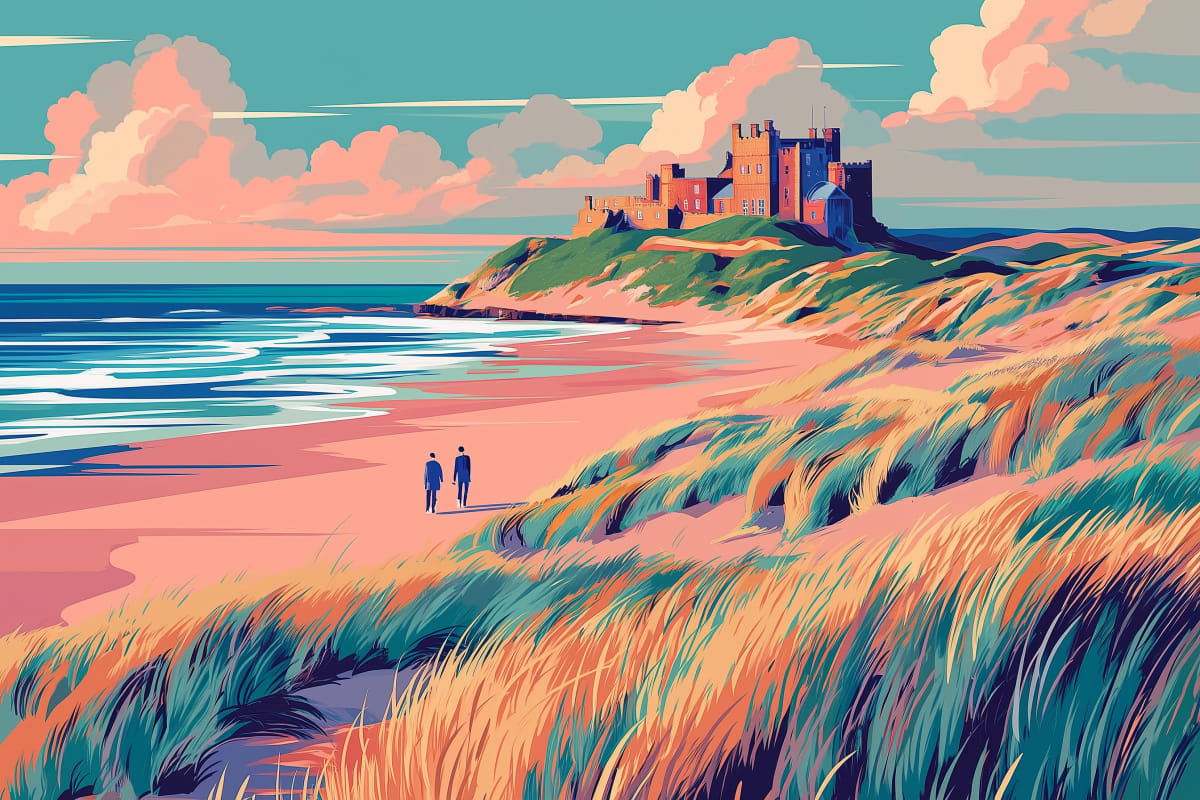
In AD 547, an Anglian warlord named Ida seized a rocky outcrop on the Northumberland coast and made it his stronghold. The place was called Din Guarie by the Britons. Ida called it Bebbanburgh, after his wife Bebba. We call it Bamburgh.
From that volcanic crag above the North Sea, Ida founded the kingdom of Bernicia, which would merge with neighbouring Deira to become Northumbria — the most powerful Anglo-Saxon kingdom in Britain. Bamburgh remained the royal seat for centuries. It was never just a castle. It was the origin point of an entire civilisation.
The Norman keep that stands today was built around 1164. In 1464, during the Wars of the Roses, Bamburgh became the first English castle in history to be defeated by cannon fire — a moment that signalled the end of the medieval castle as an invulnerable fortress. The castle was extensively restored by the industrialist Lord Armstrong from 1894, and his descendants still live there. It receives over 600,000 visitors a year.
The Border Problem
The reason Northumberland has so many castles is simple: Scotland. From the late eleventh century onwards, the Anglo-Scottish border was a zone of near-permanent conflict. Scottish armies invaded repeatedly. English armies marched north in retaliation. Between the two, the people of Northumberland lived in a state of chronic insecurity that lasted, with brief interruptions, for over four hundred years.
The response was stone. Wherever a river crossing needed defending, wherever a valley offered an invasion route, wherever a lord needed to protect his tenants and his livestock, a castle went up. The great barons built on a grand scale — Alnwick, Warkworth, Dunstanburgh. Smaller landowners built pele towers — squat, stone keeps with walls thick enough to withstand a raiding party. Farmers built bastles — fortified farmhouses with livestock on the ground floor and the family above, reached by a removable ladder.
There is more history soaked into the soil of Northumberland than in almost any other English county. And most of it was written in stone. — A visitor to Northumberland, reflecting on its castles
The Great Castles
Bamburgh Castle
Royal seat of the Anglo-Saxon kings. Norman keep built 1164. First English castle to fall to cannon fire in 1464. Restored by Lord Armstrong from 1894. Still inhabited by his descendants. Over 600,000 visitors annually.
Alnwick Castle
Second largest inhabited castle in England. Home of the Percy family since 1309. Grounds landscaped by Capability Brown. Hogwarts in the Harry Potter films. Harry Hotspur's stronghold — Shakespeare set Henry IV here.
Dunstanburgh Castle
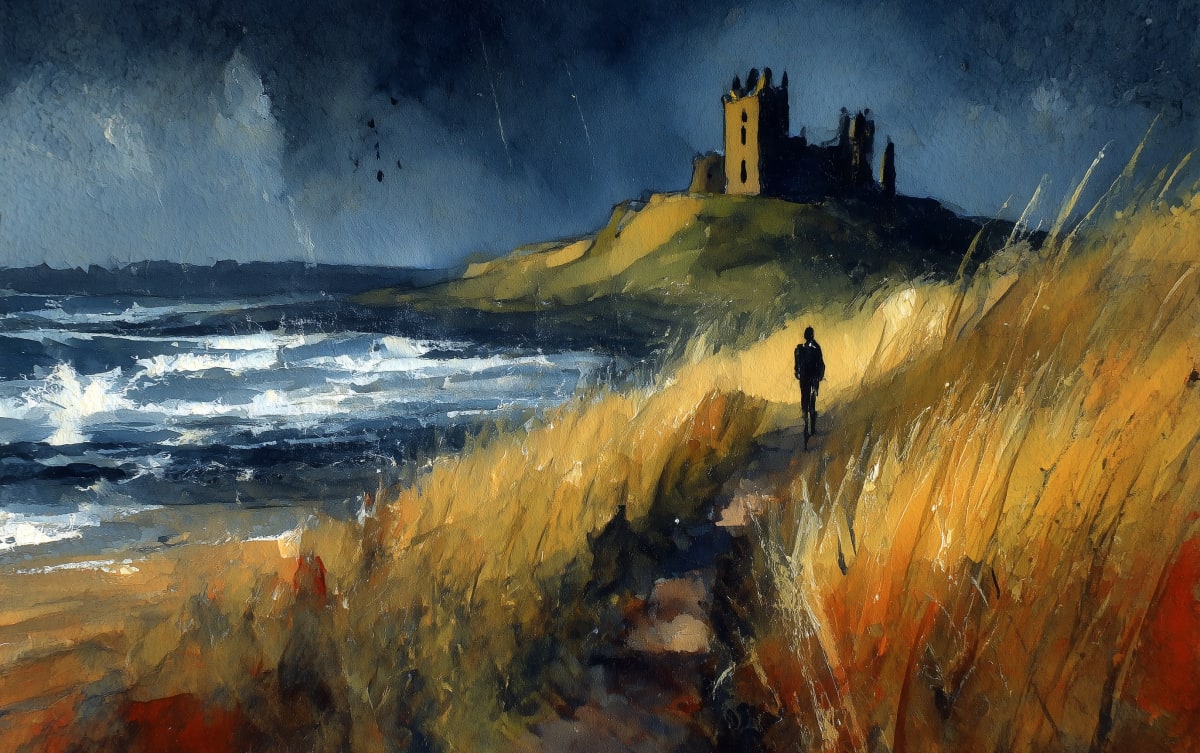
Largest castle in Northumberland at nearly 10 acres. Built by Thomas, 2nd Earl of Lancaster, as a statement of defiance against Edward II. Remodelled by John of Gaunt in the 1380s. Fell in the Wars of the Roses, 1464. Turner's first Royal Academy oil painting.
Norham Castle
Besieged at least 13 times — more than almost any other castle in England. Edward I decided the Scottish succession here in 1292. Robert the Bruce tried three times to take it and failed every time. Turner painted it more than any other subject. Free entry.
Warkworth Castle
Percy family residence from 1332. The unique cross-shaped great tower built by the 1st Earl of Northumberland in 1377. Sir Henry “Hotspur” Percy rebelled against Henry IV from here in 1403 and was killed at Shrewsbury. Shakespeare immortalised it.
Chillingham Castle
Fortified in 1344. One of the northernmost border strongholds. Home to the world's only herd of genetically pure wild white cattle, enclosed in the park for over 700 years. Reputedly the most haunted castle in England.
Ford Castle
Built by the Heron family. Captured by James IV of Scotland on the eve of the Battle of Flodden in September 1513 — a tactical victory that proved meaningless when his army was destroyed and he became the last British monarch to die in battle.
Prudhoe Castle
The only Northumberland castle never taken by the Scots. Withstood sieges in 1173 and 1174 when every other northern castle fell. A Georgian mansion was later built inside the medieval walls. English Heritage.
The Siege County
Pele Towers and Bastles
The great castles tell the story of kings and earls. But the real story of Northumberland's border is written in the hundreds of smaller fortifications that dot the landscape — the pele towers and bastles built by ordinary people who needed to survive.
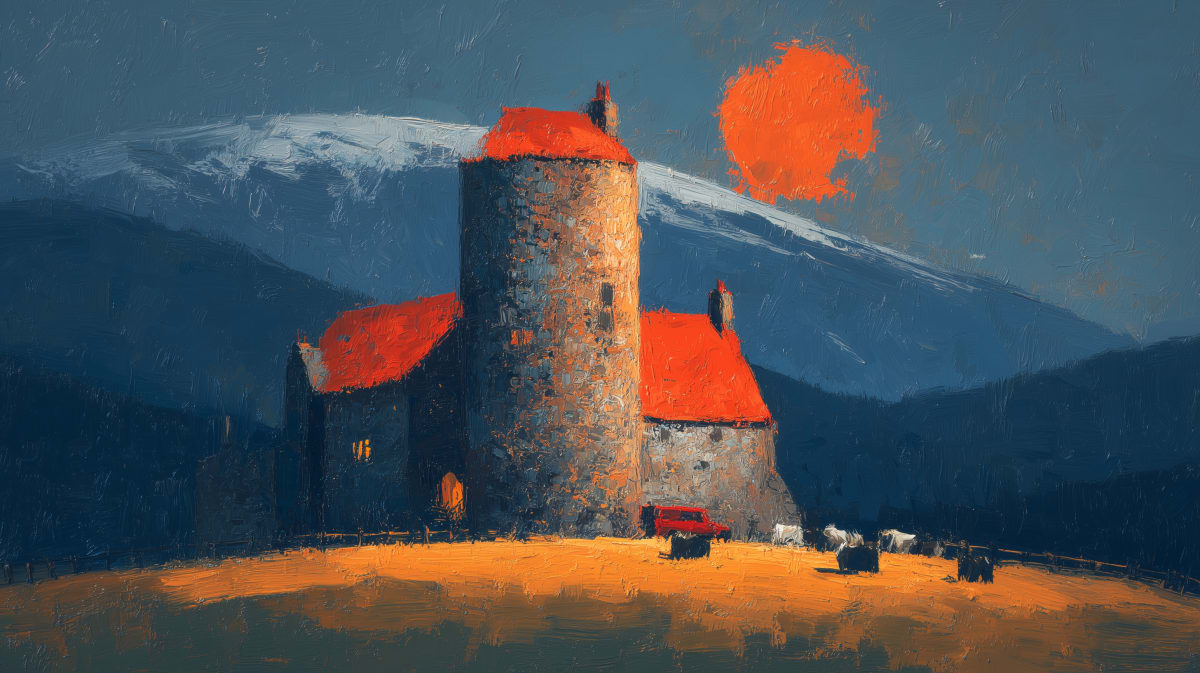
A pele tower was a small, sturdy keep — typically three storeys, with walls up to ten feet thick. The ground floor was vaulted in stone to resist fire. The entrance was on the first floor, reached by an external staircase that could be pulled up or destroyed in an emergency. They were built by the minor gentry — parsons, farmers, small landowners — and more than seventy survive in Northumberland alone.
A bastle was simpler still. A fortified farmhouse with the livestock on the ground floor and the family living above, reached by a removable ladder. When raiders came — whether Scots, English, or the lawless border reivers who terrorised both sides — the family pulled up the ladder, barred the door, and waited. Bastles cluster along the border country, particularly in the North Tyne and Redesdale valleys. Many are still lived in today, converted into farmhouses and holiday cottages, their walls as thick as the day they were built.


The Reivers
From the fourteenth to the seventeenth century, the Anglo-Scottish border was terrorised by the reivers — families who raided across the border and sometimes within their own country, stealing cattle, burning farmsteads, and taking hostages for ransom. The great reiving surnames — Armstrong, Elliot, Graham, Charlton, Robson — are still common in Northumberland today.
The reivers gave the English language the words bereaved, blackmail, and gang. They operated in a legal grey zone where neither English nor Scottish law could easily reach them. The March Wardens, appointed to keep order on each side of the border, were often reivers themselves. It was, as one historian described it, the Wild West three hundred years before America had one.
The pele towers and bastles of Northumberland are their legacy. Every thick wall, every vaulted ground floor, every first-floor entrance with its removable stair tells the same story: people who built their homes to be defended, because they had to.
Visiting the Castles
Bamburgh Castle — Open daily (seasonal hours). Admission charge. bamburghcastle.com →
Alnwick Castle — Open April–October. Admission charge. alnwickcastle.com →
Dunstanburgh Castle — English Heritage. Reached by 1.5-mile coastal walk from Craster. No road access. english-heritage.org.uk →
Norham Castle — English Heritage. Free entry. Open access. english-heritage.org.uk →
Warkworth Castle — English Heritage. Admission charge. Don't miss the Hermitage — reached by rowboat. english-heritage.org.uk →
Chillingham Castle — Open April–October. Wild cattle visits by separate booking. chillingham-castle.com →