

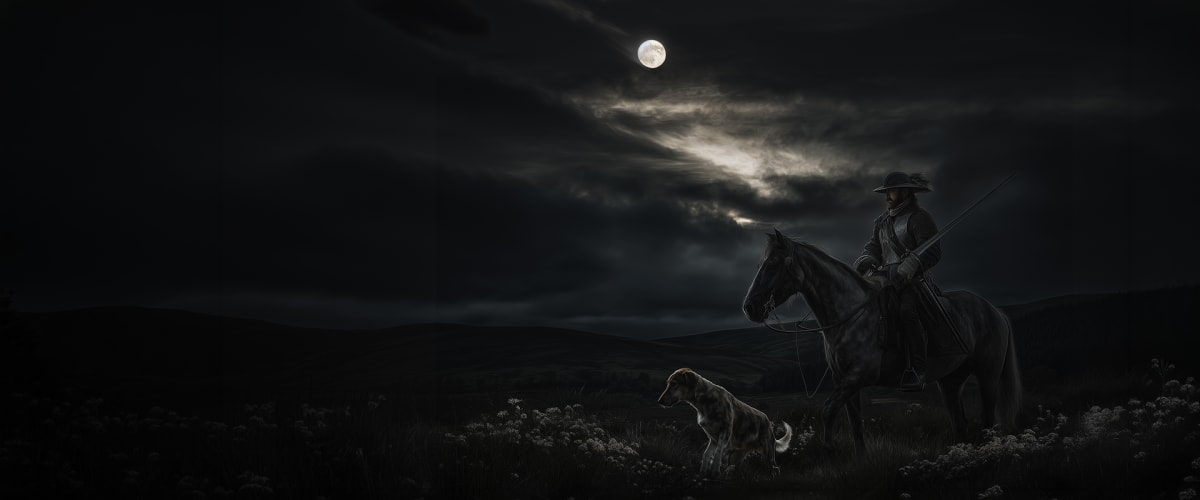


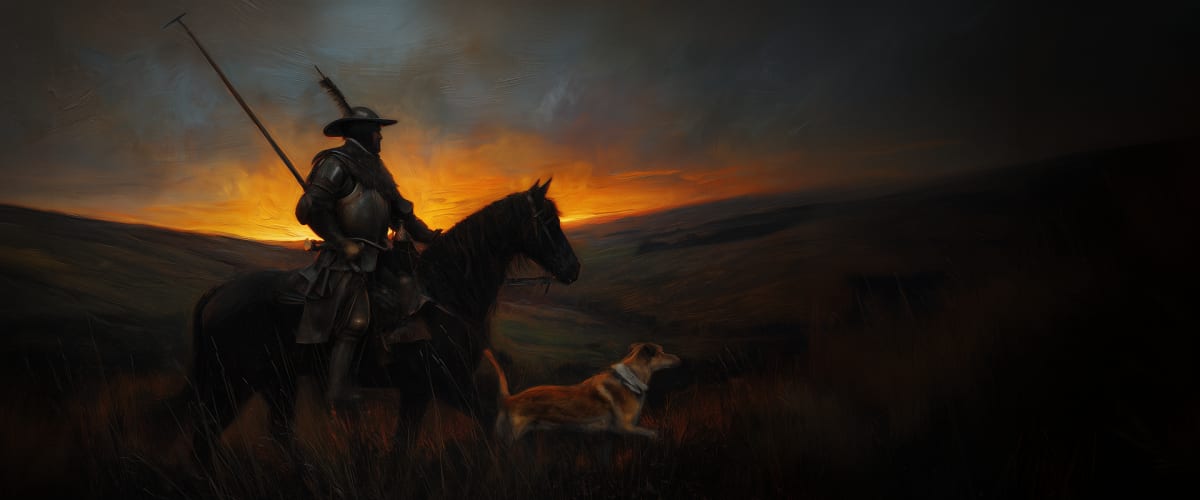


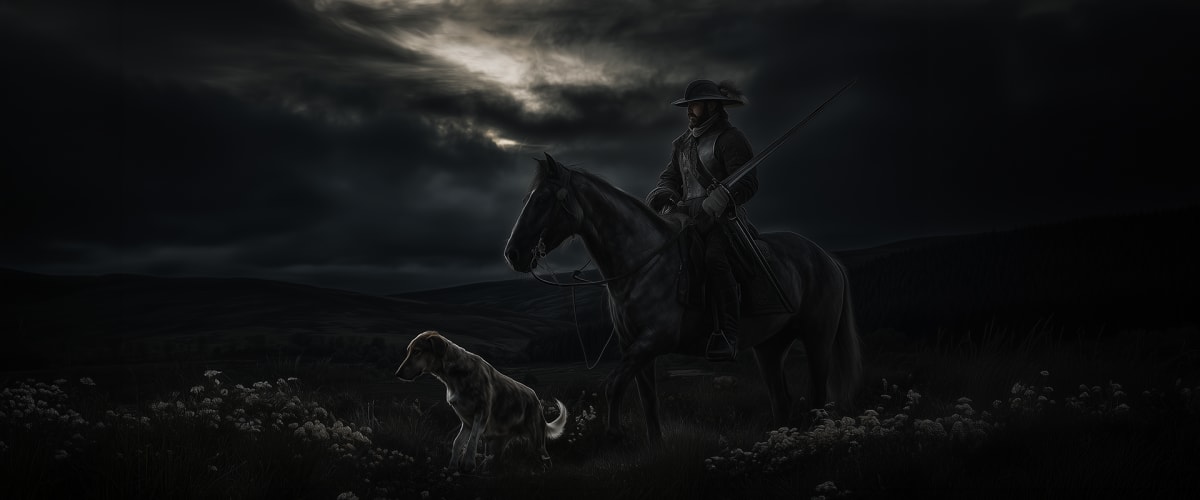
On an autumn night in 1593, a thousand horsemen rode out of the valleys of North Tynedale in broad daylight. They did not bother to wait for darkness. A thousand men — armed, mounted, moving as one — swept through the countryside, seized 1,005 head of cattle, a thousand sheep, twenty-four horses, burned a mill to the ground, and carried off goods valued at three hundred pounds. Then they rode home. Nobody stopped them. Nobody could. This was the Anglo-Scottish border between roughly 1300 and 1603 — the most chronically violent, lawless, and ungovernable frontier in the whole of Western Europe. The people who made it that way were called the reivers.
Why It Happened
The reiving era did not emerge from nowhere. It grew from a collision of geography, politics, and three centuries of relentless warfare that made normal civilian life on the border almost impossible. The Anglo-Scottish frontier ran through some of the most remote and inhospitable country in Britain — high moorland, deep peat-bottomed valleys, and ancient forests where central authority had never been more than a rumour. When the Wars of Scottish Independence erupted in 1296, what little law existed on the border collapsed entirely.
For the next three hundred years, this narrow strip of country — roughly sixty miles wide, stretching from the Solway Firth to the North Sea — was caught between two kingdoms that were almost permanently at war. Armies marched through. Towns were burned. Truces were made in the morning and broken by nightfall. The border, as George MacDonald Fraser observed, functioned as a bloody buffer state absorbing the principal horrors of war from both directions. Crops planted in spring were trampled by English cavalry in summer and stolen by Scottish raiders in autumn. The economy of the region was systematically destroyed — not once, but generation after generation, until agriculture became an act of futile optimism.
The people who lived in the border dales had two choices: leave, or adapt. They adapted. They stopped relying on crops that could be burned and turned to cattle and sheep that could be driven away at speed. They learned to raid, to fight, to move livestock through the night across terrain they knew by instinct and their pursuers did not. They built their homes to be defended — thick-walled pele towers and bastles with vaulted ground floors that would not burn. And they organised themselves into family groups — riding surnames — that owed loyalty to kinship above king, country, or God. The distinction between war and peace, between soldier and criminal, between Englishman and Scotsman, became meaningless. What mattered was the surname you carried and whether your neighbours feared you enough to leave you alone.
The Riding Surnames
The reivers were not outlaws in the romantic sense. They were families — entire communities, English and Scottish, whose way of life was built around the raid. The great reiving surnames operated on both sides of the border, and some of the fiercest feuds were not between English and Scots but between neighbouring families on the same side. Cross-border marriages were common and deliberate, creating alliances that cut across national boundaries and made a mockery of any government's attempt to enforce loyalty. A Robson might ride with an Elliot against a Charlton, or a Graham might shelter an Armstrong — nationality was secondary to kinship. The inhabitants of Redesdale and Tynedale were known as "Highlanders" even to other Northumbrians; the men who passed through the gaps in Hadrian's Wall near Housesteads were called "Busy Gap Rogues." Across the border, the Teviotdale people were dismissed as "Limmers." Each valley had its own character, its own loyalties, and its own terrible reputation.
Armstrong
The most feared surname on the border. At their peak, the Armstrongs could muster 3,000 mounted men from Liddesdale — the "cockpit of the borders" and the most notorious valley in all the Marches. Johnnie Armstrong was hanged by James V in 1530 without trial. It made no difference. The family raided for another seventy years.
Elliot
If the Armstrongs provided the weight, the Elliots provided the movement. Rivals and sometimes allies of the Armstrongs, the Elliots produced some of the most celebrated ballad heroes of the border — and carried out the last recorded border raid in 1611. The name persists across the border country today.
Graham
Occupied the lawless strip between England and Scotland that belonged to neither crown. Raided in all directions with impunity. Their end was brutal — after 1603, a hundred Grahams were locked in a dungeon, then the entire family was forcibly deported to Ireland and the Low Countries.
Charlton
A powerful English reiving family who held the upper reaches of Tynedale for generations. Their bastles and pele towers still dot the landscape around Bellingham and Tarset. They were as likely to raid their English neighbours as to cross the border — nationality was secondary to opportunity.
Robson
Neighbours and often allies of the Charltons. One of the most numerous border surnames — every Robson, the saying went, was related to every other Robson. They suffered the last recorded border raid in 1611, when Elliots and Armstrongs struck their farms eight years after the Union of the Crowns.
Kerr
A powerful family based around Jedburgh and Ferniehirst who served as March Wardens on the Scottish side. Noted for producing a striking proportion of left-handed warriors — "ker-handed" became a dialect word for left-handed that survived into the twentieth century. They built their spiral staircases to favour the left-handed swordsman.
Scott
The "Bold Buccleuch" Scotts of Branxholme were among the most powerful border families. Walter Scott of Buccleuch rescued Kinmont Willie Armstrong from Carlisle Castle in 1596 with eighty men — one of the most audacious exploits in border history, and an act that left Queen Elizabeth incandescent with fury.
Forster / Nixon / Johnstone
Sir John Forster served as English Warden of the Middle March for over thirty-five years — and was almost certainly corrupt, profiting from the very raids he was supposed to suppress. The Nixons were feared in Liddesdale. The Johnstones feuded bloodily with the Maxwells on the Scottish West March for generations, and were joined by the Fenwicks, Herons, and Musgraves in a web of alliances that no government could untangle.


The Business of Raiding
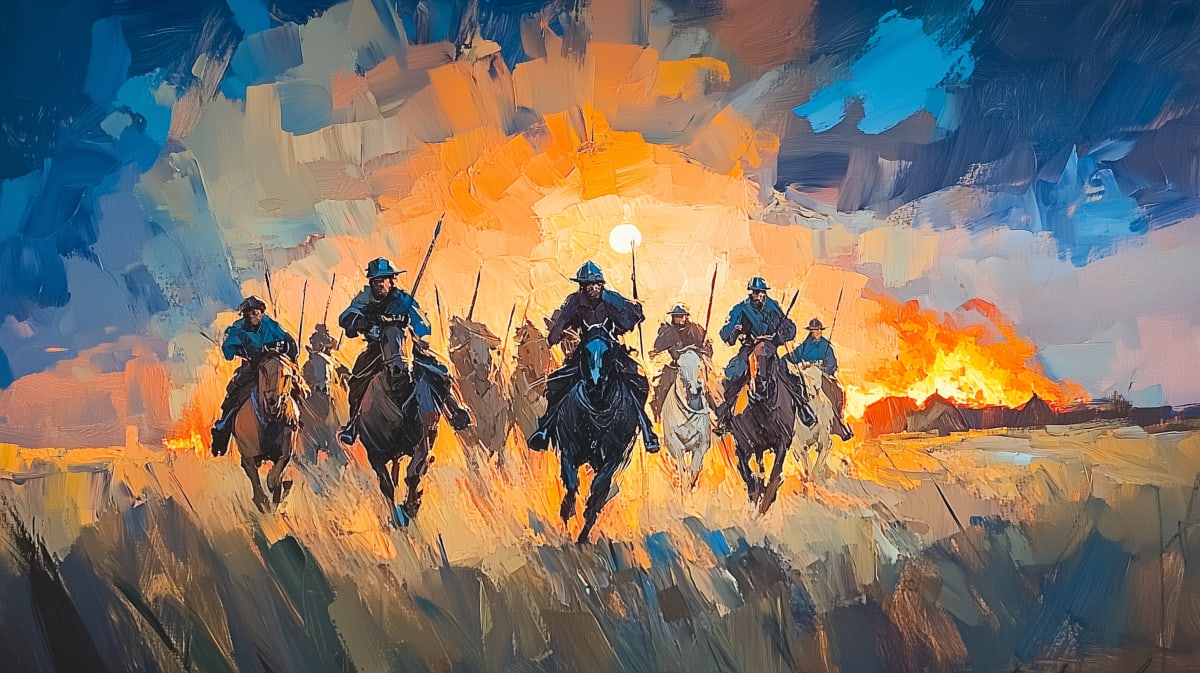
Cattle were the currency of the border. The entire economy of the region revolved around livestock — beasts that could be driven away at speed, hidden in remote valleys, and dispersed among kin before any pursuer arrived. A successful raid — riding out at dusk, crossing the border under cover of darkness, driving stolen cattle back through the passes before dawn — could transform a family's fortunes overnight. The raiding season peaked between autumn and spring, when the long nights gave cover and the cattle were fat from summer grazing. In summer, families moved to shielings — temporary upland pastures where livestock grazed from April to September — and the relative peace of the light months settled briefly over the border. This nomadic, pastoral rhythm suited the borderers well. They were not peasant farmers tied to a plough. They were stockmen, horsemen, and — when the moonlight was right — thieves.
But the reivers did not stop at cattle. They burned crops and farmsteads. They kidnapped men, women, and children for ransom. They ran protection rackets — pay us, or we burn you out — which gave the English language the word "blackmail," from the black rent extorted by border families. The term distinguished it from "greenmail," which was legitimate rent paid in proper currency. You paid one or you paid the other. The choice, if it can be called that, was yours.
They sally out of their own borders, in the night, in troops, through unfrequented by-ways and many intricate windings. All the day time they refresh themselves and their horses in lurking places, and in the night they renew their exploits. — William Camden, Britannia, 1586
How They Fought
The clothing and equipment of the border reiver was functional, light, and perfectly adapted to a style of warfare that had more in common with guerrilla raiding than pitched battle. The jack — a quilted leather coat, sometimes reinforced with small iron plates sewn between the layers — offered real protection against a sword cut without the crippling weight of full plate armour. It could be worn for hours on horseback and shed rain tolerably well. The steel bonnet protected the head — some were simple morions, others open-faced burgonets with hinged cheek-pieces, first recorded in border inventories as early as 1415. Below the waist, a reiver might wear leather breeches and heavy boots, or simply ride in whatever he owned.
The weapons were the lang spear — a lance long enough to reach a man from horseback — a broad-bladed sword, a dagger worn at the belt, and sometimes a Jedburgh axe. The Tynedale men were additionally noted for their archery, a skill that set them apart from most border fighters who preferred close-quarters weapons. But the reiver's greatest asset was not his arms. It was his horse — the hobbler pony, a small, hardy, sure-footed breed that could pick its way through bog and scree at speed in pitch darkness. These ponies were not beautiful. They were not fast on the flat. But they could cover thirty miles of the most broken country in Britain in a single night without stumbling, and that made them worth more than any weapon.
Raids were planned with military precision. A captain would choose his target — a farmstead, a village, a herd on summer pasture — and send scouts ahead to confirm the location and the defences. The riding party assembled at dusk, moved in single file along paths invisible to anyone who did not know the ground, struck fast, and scattered before pursuit could organise. Some raids involved a handful of men. Others mustered hundreds. The Great Raid of Tynedale in 1593 involved a thousand horsemen operating in broad daylight, so confident of their strength that they did not even bother with concealment.

Law on the Border
The March Wardens
The border was divided into six Marches — three English (East, Middle, and West) and three Scottish. Each March had a Warden, appointed by the crown, whose job was to keep the peace, settle disputes, and punish raiders. In theory, the system was elegant. In practice, it was catastrophically flawed, for one simple reason: the Wardens were almost invariably drawn from the same great reiving families they were supposed to police. The system would have worked, had the families best equipped for the job not also been the families most inclined to raid their neighbours. Sir John Forster held the English Middle March wardenship for over thirty-five years — enriching himself from bribes, turning a blind eye to raids by his allies, and almost certainly organising a few of his own. The Kerrs served as Scottish Wardens. So did the Scotts. The men appointed to enforce the law were the men who broke it most profitably.
The Wardens were supposed to cooperate across the border, meeting their opposite numbers to exchange prisoners, settle compensation claims, and return stolen goods. Some did. Many did not. A complaint lodged with one Warden about a raid carried out by his kinsmen had about as much chance of success as asking the fox to investigate the missing chickens. Contemporaries understood the absurdity perfectly well. One observer remarked that if Jesus Christ himself were among the borderers, they would find a way to deceive him.
The Hot Trod
Border law recognised one immediate remedy for the victim of a raid: the Hot Trod. If you had been robbed, you had the legal right to pursue the raiders across the border — even into another kingdom — within six days, with hound and horn, with hew and cry raised across the countryside, and with a burning piece of turf carried on the tip of your lance to signal your lawful purpose. If the turf was still smouldering, it was a Hot Trod — immediate pursuit, undertaken in the heat of the moment, with the stolen cattle's tracks still fresh in the mud. If the trail had gone cold and you followed later, within the six-day window, it was a Cold Trod. Either way, you rode armed. Either way, anyone who impeded you was breaking the law. And either way, the odds of actually recovering your livestock from a family of well-armed reivers who knew the terrain better than you did were not good.
The Day of Truce
At appointed times, the Wardens of opposing Marches would meet at agreed spots on the border — traditional meeting places such as Kershope Foot, Cocklaw, or the Redeswire — to settle disputes, hear complaints, hand over accused raiders, and attempt to impose something resembling justice on a society that had very little interest in it. These were the Days of Truce. Both sides were supposed to observe a complete ceasefire from sunrise the day before until sunrise the day after. Accused men could be subjected to "bauchling and reproaching" — a public shaming that was considered a legitimate punishment. Other offences that could be brought before a truce day included truce-breaking itself, attacking castles, impeding a Warden in his duties, and even the smuggling of wool across the border.
The Days of Truce were supposed to be days of peace. They frequently ended in violence. The Redeswire Fray of 1575 — which began as a routine truce day meeting and ended with Sir George Heron killed, Sir John Forster captured, and a pitched battle raging across the moorland — was one of the most notorious examples. It was, by any measure, a spectacular failure of diplomacy.
The Debatable Lands
Between the rivers Esk and Sark, on the western end of the border, lay a strip of land roughly ten miles long and four miles wide that belonged to neither England nor Scotland. This was the Debatable Land — and it was, by common consent, the most lawless territory in the whole of Britain. The legal formula was beautifully ambiguous: the land was said to be "English at its pleasure and Scottish at its will." In practical terms, it belonged to whoever could hold it by force, and that meant the Grahams and the Armstrongs.
No one was supposed to build a permanent structure on the Debatable Land. No one was supposed to remain on it between sunset and sunrise. These rules were ignored entirely. The Grahams occupied it as their own country, building steadings, grazing cattle, and raiding in all directions — into England, into Scotland, and against anyone foolish enough to pass through. A joint Anglo-Scottish commission finally divided the Debatable Land between the two kingdoms in 1552, cutting it with a line that pleased nobody. The violence continued without interruption for another fifty years, the formal division making no more practical difference than drawing a line across the surface of the sea.
The Archbishop's Curse
In 1525, Gavin Dunbar, Archbishop of Glasgow, had had enough. The reivers were robbing his tenants, burning his farms, and making a mockery of every form of spiritual and temporal authority. His response was extraordinary. He composed a monumental curse — 1,069 words in thundering Scots — and ordered it read from every pulpit in his diocese. It was, by any standard, a remarkable piece of invective, placing Dunbar among the great cursers of all time.
The curse was comprehensive. Dunbar damned the reivers from the tops of their heads to the soles of their feet. He cursed their horses, their clothing, their crops, and their livestock. He cursed anyone who gave them food, shelter, or comfort. He cursed their wives, their children, and their servants. He called down the wrath of God, the Virgin Mary, and every saint in the calendar upon them. He consigned their souls to damnation and their bodies to the crows. It was a tour de force of ecclesiastical fury, magnificent in its scope and its venom.
The reivers were not impressed. The great curse created more amusement than consternation among the border families. They regarded it simply as the growl of a toothless lion — an old churchman raging impotently from behind the safety of his cathedral walls while they continued to do exactly as they pleased. The Archbishop's 1,069 words changed nothing. The raids continued. A modern Cursing Stone inscribed with Dunbar's words was installed in Carlisle in 2001. Local councillors blamed it for everything from flooding to an outbreak of foot-and-mouth disease, and demanded its removal.
Pele Towers and Bastles
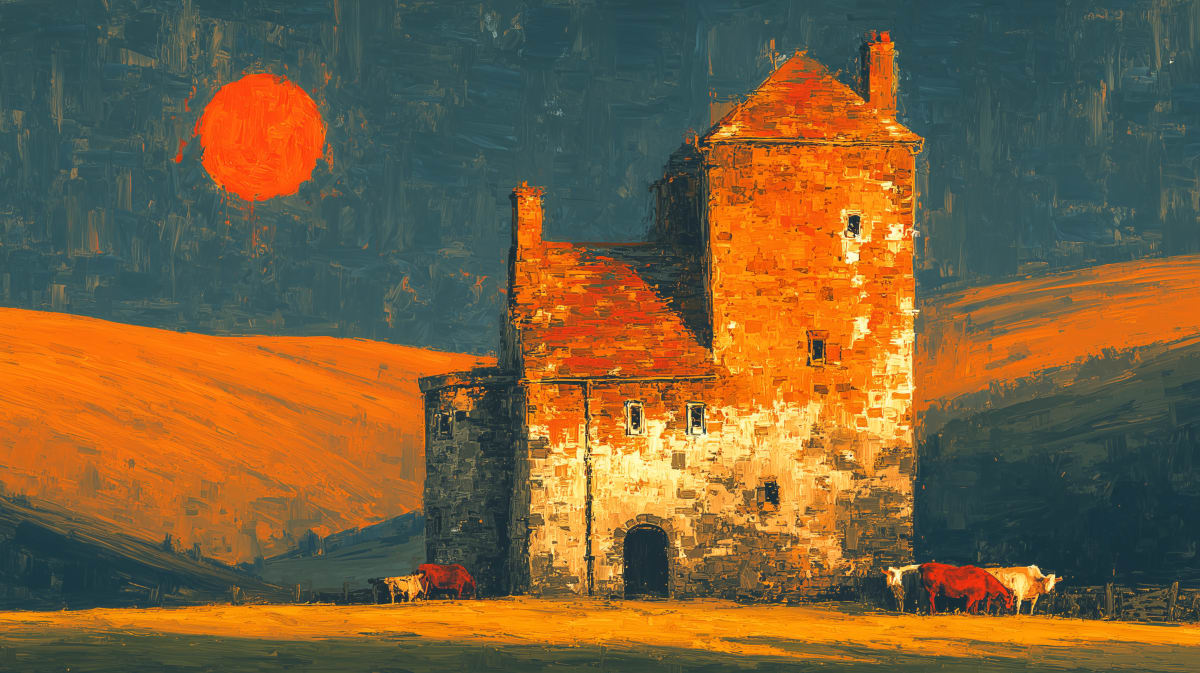
The architecture of the border tells the story more plainly than any chronicle. Pele towers — squat stone keeps with walls between three and ten feet thick, vaulted ground floors that would not burn, and first-floor entrances reached by external stairs that could be destroyed in an emergency — were built by the minor gentry across the border country from the fourteenth century onwards. A survey in 1415 recorded more than a hundred pele towers in Northumberland and the border counties. Some were grand, built by families with pretensions to lordship. Others were modest — "vicar's peles," built by parish clergy who needed protection as much as anyone. They typically stood three storeys high: livestock and stores on the ground floor, a hall on the first, and sleeping quarters above. The walls were thick enough to resist anything short of cannon.
Bastles were simpler and more numerous: fortified farmhouses with walls a metre thick, livestock penned on the ground floor and the family living above, reached by a removable ladder that was pulled up at night. Narrow arrow slits — too small for a man to climb through — provided ventilation and a field of fire. Over a thousand bastles were built across the border region, and they cluster most densely along the North Tyne and Redesdale valleys. Many are still standing. Some are still lived in, their walls as thick and their window openings as narrow as the day they were built.
Every thick wall, every vaulted ceiling, every narrow window slit tells the same story: these were people who expected to be attacked, who knew the attack would come at night, and who built accordingly. The key sites — Black Middens in Tarset, the bastles around Elsdon, Tosson Tower, and the monstrous Hermitage Castle in Liddesdale — are monuments to a society that lived permanently on a war footing.


The Raid Stories
The border produced three centuries of raids, and some of them were recorded with enough detail to bring them back to life. They are worth telling individually, because the dry language of official complaints cannot disguise the sheer audacity of what these men did.
The Lammermuir Sheep Raid, 1502
In 1502, two men known to the records only as Hob the King and Dand the Man rode deep into Scotland — far beyond the usual raiding range — and stole 180 sheep from farms in the Lammermuir Hills. It was not a large raid by border standards. But the distance was extraordinary. The Lammermuirs lie well north of the border, in country that should have been safe from English raiders. Hob and Dand drove 180 sheep across miles of open country, through territory controlled by Scottish families, and brought them home. Their nicknames suggest they were known men, experienced reivers with reputations. The records do not say whether they were ever caught.
Post-Flodden, 1513
After the catastrophe of Flodden in September 1513 — where James IV and the flower of Scottish nobility were killed — the English border families saw their opportunity. Scotland was leaderless, its fighting men dead on the field. Lord Dacre, the English Warden, launched retaliatory raids into southern Scotland and seized 4,000 cattle in a single campaign. It was not military strategy. It was opportunistic theft on an industrial scale, conducted under the cover of legitimate warfare, and it set the tone for the decades that followed.
Anton Armstrong's Raid, 1541
In 1541, Anton Armstrong led a raiding party that burned the settlement of Bewcastle, destroyed Jack Musgrave's house, and killed seven members of the Fenwick family. This was not a cattle raid. It was punitive violence — a statement of power designed to terrorise an entire district. The Armstrongs were making it clear that Bewcastle and its surrounding lands were theirs to burn at will, and that opposing them carried a fatal cost.
The Raid of the Redeswire, 1575
On 7 July 1575, Sir John Forster, the English Middle March Warden, met his Scottish counterpart Sir John Carmichael at the Redeswire — a meeting point on Carter Bar — for a routine Day of Truce. The business began normally enough. Complaints were heard. Accused men were produced. Then a dispute arose over a particular offender whom Forster could not deliver. Words were exchanged. A Tynedale man fired an arrow. Within minutes, the truce day had collapsed into a pitched battle. Sir George Heron was killed. Forster himself was captured by the Scots and dragged across the border. It was, in the understated language of the records, an unsatisfactory day.
The Great Raid of Tynedale, 1593
The raid of 1593 stands alone in the annals of border violence for its sheer scale and its brazenness. A thousand horsemen — drawn from multiple Tynedale surnames — rode out not at night but in broad daylight, so confident in their numbers that concealment was unnecessary. They seized 1,005 cattle, 1,000 sheep, and 24 horses. They burned a mill. They carried off goods worth three hundred pounds. The total haul, in a region where a single cow could represent a family's wealth, was enormous. No Warden intervened. No pursuit was organised. The raiders rode home openly, driving their stolen herds before them along roads that everyone could see.

Kinmont Willie
Of all the stories the border produced, one stands above the rest — not because it was the bloodiest, but because it was the most gloriously, recklessly audacious. On 17 March 1596, William Armstrong of Kinmont — known as Kinmont Willie — was riding home from a Day of Truce at Kershope Foot. The truce was still in effect. He was under its protection. It did not matter. A party of Englishmen seized him, dragged him across the border, and locked him in Carlisle Castle.
The capture was illegal — a blatant violation of truce law — and the Scots were furious. Diplomatic complaints were lodged. Demands were made for Kinmont Willie's release. The English Warden, Lord Scrope, refused. Walter Scott of Buccleuch — the "Bold Buccleuch," one of the most formidable men on the Scottish border — decided that if diplomacy would not work, direct action would.
On the night of 13 April 1596, Buccleuch assembled eighty men. He had bribed a member of the Carlisle Castle garrison to leave a postern gate open. The weather was appalling — howling wind and driving rain — which suited his purposes perfectly. The raiding party crossed the border, reached the castle walls, broke through the outer gate, smashed through the inner postern with a crowbar, found Kinmont Willie in his cell, and carried him out. By dawn they were back across the border. The castle garrison had barely managed to raise the alarm.
Queen Elizabeth was incandescent. She demanded Buccleuch's surrender for trial. King James of Scotland, who privately admired the exploit, stalled for months before reluctantly handing Buccleuch over to English custody — briefly. The Bold Buccleuch was soon released, and the rescue of Kinmont Willie passed into border legend as the supreme example of reiver daring. It spawned one of the finest border ballads, and it remains the single most famous event in the entire reiving era.
The Spurs on a Plate
There was an unwritten custom among the reiving families that reveals more about their world than any official record. When the larder was empty — when the last of the meat had been eaten and there was nothing left to feed the household — the wife of the house would serve her husband's spurs on a plate instead of dinner. No words were needed. The meaning was understood by every man on the border. Mount up. Ride out. Raid — or the family starves.
It was not a gentle domestic arrangement. But it was an honest one. The border was a place where theft and survival were the same thing, where the line between raider and provider had been erased by centuries of warfare, and where a woman setting spurs on the table was performing an act not of cruelty but of cold, practical necessity.
Words We Inherited
The reivers left their mark on the English language in ways that most people never suspect. "Bereaved" — robbed of something precious — comes directly from "reived," the act of violent theft. "Blackmail" — from the black rent paid to reivers for protection, as distinct from greenmail, which was proper rent paid in lawful currency. "Gang" — from a group of men riding together on a raid, moving as one body. Possibly "kidnap" — from the snatching of people for ransom, a standard reiving tactic. These words passed into standard English, stripped of their violent origins, and are used every day by people who have never heard of the border reivers and have no idea that the language they speak carries the fingerprints of three hundred years of organised frontier theft.
The End of the Reivers
On 24 March 1603, Elizabeth I died and James VI of Scotland became James I of England. Overnight, the Anglo-Scottish border ceased to exist as a political frontier. The reivers, characteristically, saw not an ending but an opportunity. In the days immediately following Elizabeth's death — a period known as "Ill Week" — they launched a final spree of raiding, operating on the old border principle that when one monarch died, the law died with them. They were wrong. The new law was about to fall on them with a weight they had never experienced.
James had no tolerance for the reivers. He decreed that the Marches would "vanishe and delete" and renamed the border region the "Middle Shires," as though renaming a place could erase three centuries of violence. But James did not stop at words. He appointed commissioners with extraordinary powers and set about destroying the reiving families with a thoroughness that shocked even contemporaries who had lived through centuries of border bloodshed.
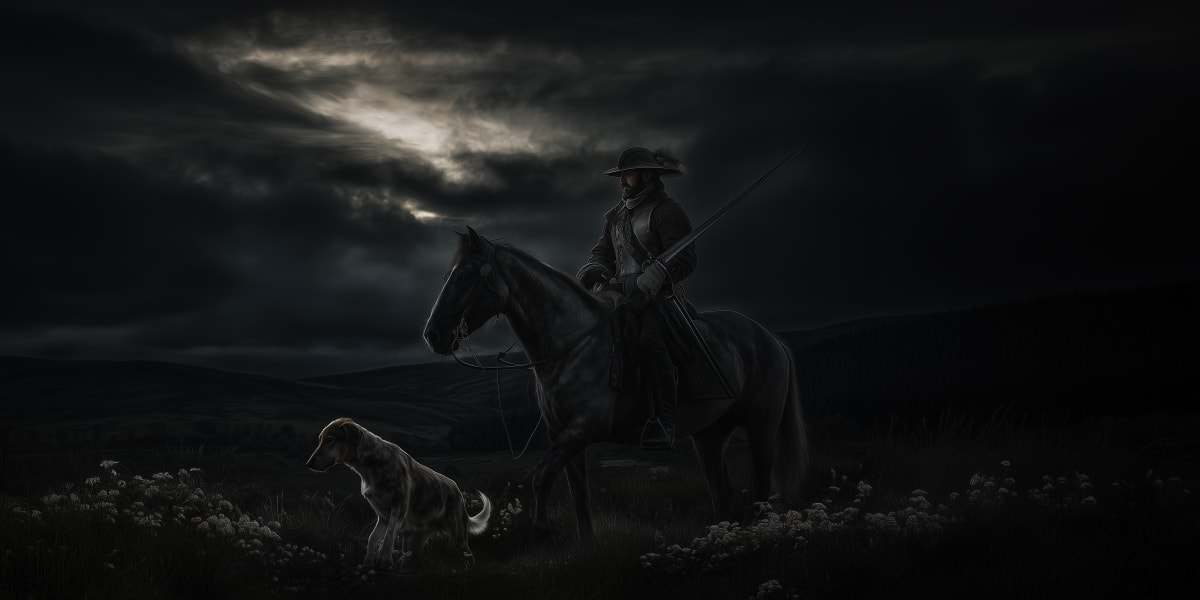
The numbers tell the story. In the first two years of the Pacification, 224 reivers were executed. Gallows were erected on every prominent hill. Thrifty Scots, it was observed, sometimes saved the expense of a rope by drowning their reivers in batches — ten or twenty at a time. The Grahams of the Debatable Land were treated with particular brutality: a hundred were locked in a dungeon, and the entire family was then expelled from the border and transported to Ireland. The Armstrongs were hanged in batches. Border laws were abolished. The March Wardens were dissolved. The riding surnames — the Armstrongs, Elliots, Grahams, Nixons, and others — were formally outlawed in 1611. By 1620, the reiving culture that had dominated the border for three hundred years was extinct.


The Diaspora
The story of the border reivers did not end on the gallows or in the drowning pools of the Pacification. It continued — across the Irish Sea and then across the Atlantic — in one of the most consequential migrations in the history of the English-speaking world.
In 1609, James I launched the Ulster Plantation, and he used it deliberately as a dumping ground for the border families he wanted rid of. The Grahams, the Armstrongs, the Elliots, the Bells, the Beatties, the Herons, the Humes — these surnames, so recently outlawed on the border, reappear in the records of County Fermanagh, County Tyrone, and County Donegal. They brought their clannishness with them. They brought their distrust of central authority. They brought their skill with livestock and their talent for violence. And within a century, many of their descendants were on the move again.
Between 1717 and 1775, more than 200,000 Scotch-Irish — the descendants of the Ulster-planted borderers — crossed the Atlantic to the American colonies. They arrived to find the coastal lands already taken by English and German settlers. So they pushed inland, into the Appalachian Mountains, into the backcountry of Virginia, the Carolinas, Tennessee, and Kentucky. They settled in terrain that would have been familiar to their great-grandparents — remote, mountainous, beyond the reach of government — and they recreated, in the hollows and ridges of Appalachia, a society that bore an unmistakable resemblance to the one their ancestors had built on the Anglo-Scottish border.
The historian David Hackett Fischer traced this connection in detail, showing how the culture of the border — its fighting spirit, its raiding traditions, its distaste for government, and its fierce sense of clan and family — became the culture of the American frontier. The Scotch-Irish borderers became the archetypal frontier settlers: suspicious of authority, loyal to kin, quick to violence, and deeply attached to their independence. Their history had prepared them for exactly this kind of life. They had been doing it for three hundred years.
The surnames survive. Armstrong, Elliot, Graham, Charlton, Robson, Kerr, Scott, Forster, Nixon, Johnstone — they are still the common names of the border country, on both sides. They are also the common names of Appalachia, of the American South, and of Ulster. The pele towers have been converted into homes. The bastles are farmhouses and holiday lets. And George MacDonald Fraser's The Steel Bonnets — published in 1971 and never out of print — remains the definitive modern account of the reiving centuries. It is one of the finest works of popular history ever written about any region of Britain.

Reiver Sites to Visit
Hermitage Castle — Liddesdale, Scottish Borders. The most atmospheric reiver stronghold in existence. Roofless, massive, and deeply unsettling. Historic Scotland. Seasonal opening.
Black Middens Bastle — Tarset, North Tynedale. English Heritage. Free entry, open access. One of the best-preserved bastles in Northumberland — a fortified farmhouse built to withstand reiver raids.
Tarset Bastle — Near Lanehead, North Tynedale. Another fine example of border defensive architecture in the heart of Charlton and Robson territory.
Elsdon Pele Tower — Elsdon village, Redesdale. A well-preserved pele tower in one of Northumberland's most atmospheric border villages. The village church contains a mass grave from the Battle of Otterburn.
Tosson Tower — Near Rothbury, Coquetdale. A ruined pele tower in the foothills of the Simonside Hills, standing watch over the approaches from Redesdale.
The Cursing Stone — Carlisle, Cumbria. A modern sculpture inscribed with Archbishop Dunbar's 1525 curse against the reivers. Located in the Tullie House Museum undercroft.
Most bastle and pele tower sites are free, open access, and unmarked. An Ordnance Survey map and good boots are essential. The border country is remote and beautiful — but mobile phone coverage is unreliable, and the weather can change in minutes.
Further Reading
The Steel Bonnets — George MacDonald Fraser (1971). The definitive modern account of the reiving centuries. Never out of print. If you read one book about the border, this is it.
Born Fighting: How the Scots-Irish Shaped America — Jim Webb (2005). Traces the border reiver diaspora through Ulster to Appalachia. Essential for understanding how the culture of the Anglo-Scottish frontier became the culture of the American backcountry.
The Borders — Alistair Moffat (2007). A broader history of the border region from prehistory to the present, by one of Scotland’s finest popular historians.
Exploring Border Reivers History — Philip Nixon (2011). A practical guide to the reiver sites, bastles, and pele towers that survive across the border country.
In The Footsteps of Reivers — Brian Dingle (2017). Walking the landscape where the reivers rode — a guide for those who want to see it for themselves.
Reading list compiled with reference to the Border Reiver Heritage Society.